Growth
The secrets to spinout success: How to turn inspired ideas into brilliant businesses
- Growth
- Article
- 5 minutes read

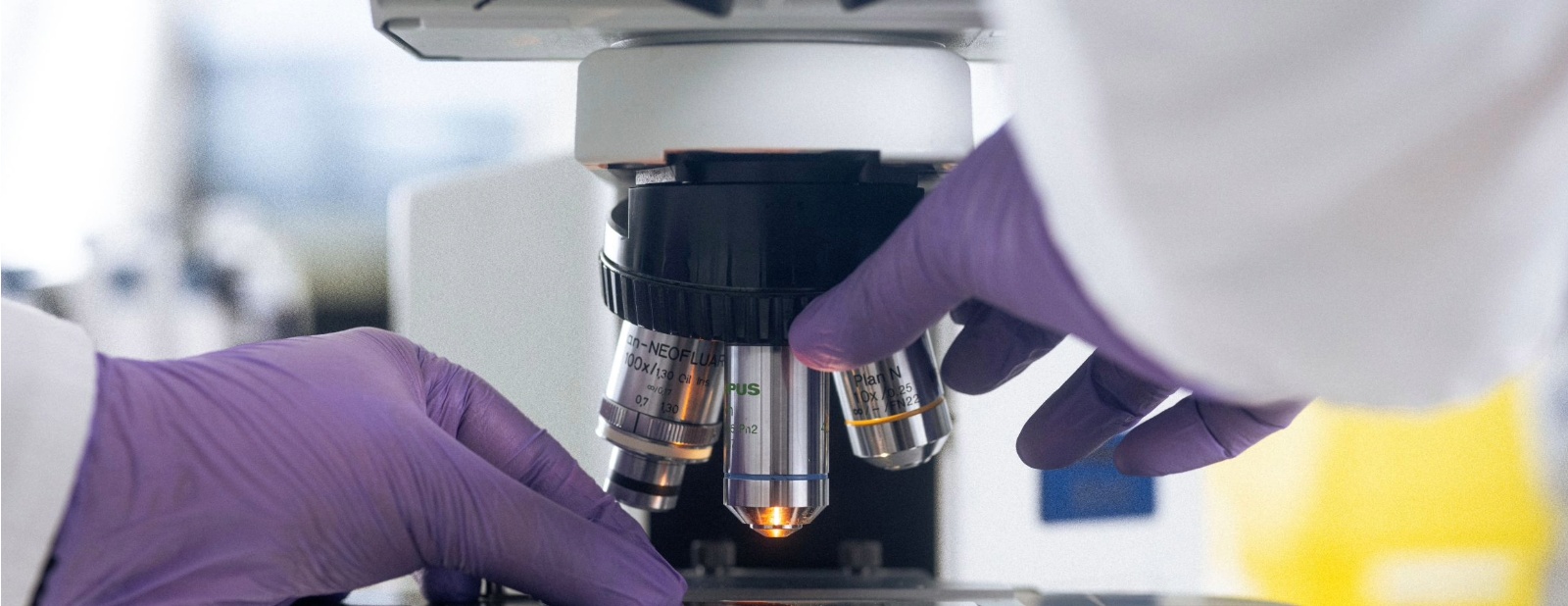

Extraordinary innovation can come from anywhere, but the UK’s universities have a bit of unfair advantage when it comes to inspired ideas.
Not only are there several leading universities producing significant research around AI, climate tech, deep tech and life sciences, there are also well-known support structures designed to help academics make the leap from research to real-world innovation.
But even with all the right tools, growing from spinout to successful scaleup remains a difficult process.
That’s why we recently convened founders, investors, academics and policymakers for informative panel discussions and networking so founders could learn about how to navigate the nuanced challenges that spinouts face.
The first panel of the day, which included representatives from the University of Oxford, London Stock Exchange Group (LSEG) and the House of Lords, quickly went about busting myths about how quickly Britain can commercialise great business.
There was general agreement that the perception that the UK is too slow is outdated. Lord Tarrasenko, President of Oxford’s Reuben College, argued that that it may have been genuinely difficult to spinout a company 25 years ago, the sector now moves much faster.
He went on to point out that many universities now place equal importance on innovation as they do with teaching and research, reflecting the growing understanding of the important role spinouts and universities play in driving the innovation ecosystem forward.
This recognition goes beyond campus. Both public and private sector offer support structures to help boost funding for promising spinouts, but in some ways British spinouts are a victim of their own success. They grow so quickly that they inevitably require foreign investment to sustain their stratospheric growth trajectory.
The next myth that panellists covered was whether or not this pattern will continue. Will the world-leading idea to come out of a UK university will be able to remain a British business?
Again, the consensus in the room was yes – but not without the right support. The key? Providing technology, talent and policy support early, and making an active case for staying in the UK. Get this balance right and the benefits to the country in terms of the boost to jobs, innovation, university funding and the economy as a whole could be significant.
As our CEO Emily Turner noted, "There's only been one seed stage company globally to raise one billion dollars. It was done here in the UK."
That means spinouts have footsteps to follow in (even if they’re big shoes to fill). So how should they go about growing?
When it comes to building a successful spinout, panellists agreed that the science itself is often “the easy part”.
The real challenge comes in turning complex academic research into viable business.
There are 2 key challenges spinouts face as they leave the lab – securing funding, and commercialisation:
Spinout challenge 1: Funding
Fundraising is a complex process, but our panellists pointed out that securing pre-incorporation funding as a significant and complex issue.
Investors expect founders to show their business is viable before committing capital, and that means spinouts need funding at the proof-of-concept (POC) stage.
Unfortunately, our panel estimated that the majority of UK universities lack the funding to take research from the end of a project through to proof of concept.
This leaves a crucial gap: without capital at this stage, the next generation of global technology companies does not get started.
Spinout challenge 2: Commercialisation
Those spinouts that manage to secure the funding they need to build a product from their POC phase face another challenge – commercialisation.
Dealing with increasing complexity as a business scales is hard enough, but many spinouts have to deal with by founders, investors and universities pulling in different directions on a range of points from desired business models to IP ownership and timeframes.
Then there’s the question of funding that growth. Many spinouts look to investors from further afield for the capital they need to grow in line with investor expectations - which is why there’s an influx of international investors at later growth stages.
Again, this brings different expectations that can muddy the route to market – especially given that most spinout founders aren’t natural entrepreneurs.
Most spinout founders are, first and foremost, scientists – NOT sales people. That means they may stumble when it comes to seeking and securing the investment and support they need to build successful businesses.
Martina King, former CEO, Featurespace"None of us are born salespeople, so you have to learn the skill."
The topic of skills was at the heart of our second panel, who suggested founders are initially expected to be like Swiss army knives, adept and solving any number of problems.
That’s tough when your superpower is cutting-edge, razor-sharp specialism in a complex scientific setting.
However, as businesses scale they can bring in specialists to help so they don’t need to handle every situation themselves. In fact, hiring is crucial, because getting the right people in early can be a catalyst for growth.
Of course, poor hires can hold a business back, so it's equally important that spinouts are committed to maintaining culture fit as they bring in more business-focused talent.
Moving from spinout to startup and scaleup as speed is a journey that can make it difficult to think about the destination, but panellists stressed the importance of understanding different exit options early.
Neil Shah from the London Stock Exchange (LSEG) estimated that roughly 70 to 80 per cent of companies globally exit through M&A, but emphasised the fact that founders should be aware that this isn't the only route.
He added that LSEG aims to make the IPO route aspirational, and pointed to reforms such as the PISCES framework, which allows the secondary trading of shares in private companies, as ways to provide liquidity and prevent companies from being sold prematurely.
Of course, market conditions can complicate exit further.
Periods of depressed valuations and low deal liquidity can create pressure to accept less than a company is worth, and there's no 'right' time to exit a spinout, so founders need to have confidence in saying no and look beyond price.
Finally, they were reminded that the exit process itself is gruelling and often a full-time job on its own - so the more early preparation they do, the better.
The UK has the research, ambition and ingenuity to build extraordinary businesses.
Turning that potential into lasting success means connecting breakthrough science with funding at every stage, commercial expertise and a shared vision between founders, universities and investors.
Emily Turner, CEO, HSBC Innovation Banking UK"Connecting extraordinary founders from across the UK with capital, expertise and networks is fundamental to building a stronger and more competitive innovation economy."
For founders, it also means building the right team and preparing early for the opportunities ahead. Not just the next funding round, but growth and eventual exit.
The challenges are real, but so is the opportunity. By working together, the UK’s innovation community can help more spinouts become global success stories: businesses that start here, scale here and turn today’s discoveries into tomorrow’s lasting impact.
Any opinions expressed are merely opinions and not facts. All information in this document is for general informational purposes and not to be construed as professional advice or to create a professional relationship and the information is not intended as a substitute for professional advice. Nothing in this document takes into account your company’s individual circumstances. HSBC Innovation Banking does not make any representations or warranties with respect to the accuracy, applicability, fitness or completeness of this document and the material may not reflect the most current legal or regulatory developments. HSBC Innovation Banking disclaims all liability in respect to actions taken or not taken based on any or all of the contents in this document to the fullest extent permitted by law. Nothing relating to this material should be construed as a solicitation or offer, or recommendation, to acquire or dispose of any investment or to engage in any other transaction.