Growth
Second Thoughts with Anas Nader: A Founder Success Podcast
- Growth
- Video
- 4 minutes read




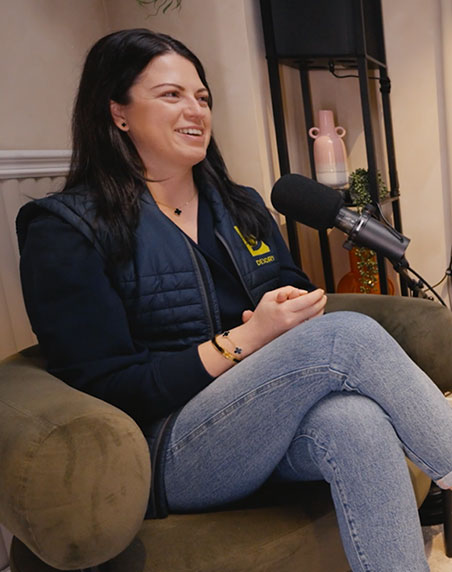
Second Thoughts is a conversation about the decisions that shape a startup’s trajectory. Host Emily Wood invites experienced entrepreneurs to unpack the moments they’d rethink, the lessons they learned the hard way, and what they wish they’d known before they started—so other builders can move faster, with fewer avoidable scars.
Anas Naddar is the CEO and co-founder of Patchwork Health, a digital health platform working with the NHS to transform flexible working. A clinician by background, Anas helped spin Patchwork out of an innovation project at Chelsea and Westminster Hospital. The business has raised almost £50m and is now used by more than 50% of UK hospitals across a five-product platform (around 130–140 organisations including some private hospitals).
Anas describes an early inflection point: Patchwork had built an MVP that exceeded expectations, but the company didn’t have the cash to hire a team, quit clinical work, or properly go to market. An angel syndicate was interested, but the lead investor challenged him to prove not just product capability—but sales capability: win a second hospital outside the original pilot site.
With roughly two months left, the team pushed hard through a procurement cycle that’s rarely quick. They eventually won the contract—only to be told they’d sign after Christmas. Anas insisted on a formal letter immediately, took it to investors, and that proof point triggered the “domino process” that unlocked funding. It’s a sharp reminder that in enterprise markets, momentum often depends on evidence, not enthusiasm—and that founders sometimes need to be politely relentless about documentation.
Anas reframes a common investor narrative. The NHS is complex (hundreds of organisations), but it still behaves like an enterprise customer: it has problems, it procures solutions, and it will adopt technology that demonstrably delivers outcomes. The key is learning how the system buys, how it evaluates innovation vs incumbents, and how to build credibility.
His biggest practical insight: succeed by being an “insider” rather than an outsider—either through the founding team or by surrounding the business early with people who truly understand frontline realities and can “speak the language” of the NHS.
A standout theme is empathy for the people who actually carry change: not only clinicians, but also rota coordinators, service managers, and administrators—the “unsung heroes” who keep services running while firefighting constant operational pressure and policy change.
Anas argues the NHS doesn’t need more apps that add clicks. It needs technology that removes friction and does the heavy lifting in the background. That shifts the product challenge from building “snazzy software” to delivering real workflow improvement—supported by serious change management.
Anas explains why many health tech businesses stall around the first £1–2m in revenue. Sometimes the problem isn’t universal enough beyond early adopters. Often, the bigger issue is that serving a handful of customers is fundamentally different from serving dozens: sales motion, implementation, customer success, and product adaptability all need to level up.
His broader point applies beyond healthcare: companies must keep questioning product–market fit because customers, technology, and expectations evolve. What worked in 2017 may not work in 2026.
Anas stayed heavily involved in the first dozen customers, using those cycles to shape the sales playbook and tighten feedback loops. But he’s clear that stepping back is necessary—otherwise the CEO becomes the constraint.
He outlines an evolution many founders will recognise:
He also shares an unconventional but effective leadership story: Patchwork’s current CRO previously served as his chief of staff—a pharmacist and ex-consultant with deep NHS “insider” credibility and a consultative selling approach focused on outcomes, not “selling pixels and licences.”
Anas reflects candidly on how his leadership style changed. Early on, he was more intense—partly because it’s hard to tell which decisions are catastrophic and which are simply “part of the job.” Over time, he built the muscle to stay level-headed and to separate urgency from panic.
He emphasises a core CEO responsibility: your demeanour sets the mood. Stress and panic don’t solve problems faster; calm realism and action do. But because leaders can’t always “vent” to their teams, he highlights the importance of peer CEO networks, coaching, and personal outlets (for him: endurance sports).
Comparing A&E medicine with startup leadership, Anas notes both can be intense and rewarding, with strong camaraderie and constant firefighting. The key difference: as a doctor, you can switch off after a shift; as a CEO, you rarely fully do.
His personal view of burnout is less about hours and more about autonomy and control—something he felt was often missing in the NHS. He also shares how parenting (two young children) forced healthier boundaries and structure, making him more selective about evening events and more intentional about switching off.
Any opinions expressed are merely opinions and not facts. All information in this document is for general informational purposes and not to be construed as professional advice or to create a professional relationship and the information is not intended as a substitute for professional advice. Nothing in this document takes into account your company’s individual circumstances. HSBC Innovation Banking does not make any representations or warranties with respect to the accuracy, applicability, fitness or completeness of this document and the material may not reflect the most current legal or regulatory developments. HSBC Innovation Banking disclaims all liability in respect to actions taken or not taken based on any or all of the contents in this document to the fullest extent permitted by law. Nothing relating to this material should be construed as a solicitation or offer, or recommendation, to acquire or dispose of any investment or to engage in any other transaction.