Innovation
Carbon management in the United Kingdom: Capturing the opportunity
- Innovation
- Article
- 4 minutes read




Carbon management is the headline term covering both carbon capture and storage (CCS) and carbon dioxide removals (CDR) – two similar but distinct technology groups.
CCS refers to the capture and storage of newly created carbon dioxide molecules – for example, when fossil fuels are combusted in a power station or generated via industrial process. CDR is the extraction of existing CO2 from the ambient air we breath2. Both will be essential to delivering net zero2.
There is now widespread consensus that fossil fuels remaining in the power mix will require investment into methane abatement and such carbon capture technologies to enable the net zero transition.
The UK is already a global leader in both fields1. Over the past 2 years the country has emerged as one of the world’s top destinations for project finance into CCS, focused around two world class hubs: Hy-Net in the north-west and the East Coast Cluster in the north east. At a time when some other regions are seeing investors pause amid political uncertainty, the UK has emerged as a blueprint for attracting foreign direct investment into carbon management.
This global leadership is in part a function of stable, impactful government support for CCUS which continues to enjoy broad political support nationally and regionally. It also reflects decades of investment into R&D and effective collaboration between industry and the UK’s world class academic institutions.
Underpinning this is a thriving ecosystem of supporting services which have made investment simpler and lowered costs – from insurance and finance to software and skilled engineering.
At the same time, the UK is home to a range of cutting-edge CDR technology developers, demonstrating with real world projects how solutions like biochar, direct air capture, enhanced rock weathering and bio-carbon removal and storage can deliver durable carbon removals at increasingly affordable cost.
In this context, it’s important to note the findings of the recent Independent Review of Greenhouse Gas Removals, led by Dr Alan Whitehead and published by the Department for Energy Security and Net Zero (DESNZ). The paper sets out a pathway for scaling CDR technologies and presents clear policy recommendations for achieving this goal. Amongst other recommendations, the paper calls for a distinct funding mechanism for nature-based solutions, a sub-mandate for engineered solutions and a net zero aviation mandate which would recognize CDR as a legitimate pathway for decarbonising air travel. These proposals can position the UK at the forefront of the global carbon management industry.
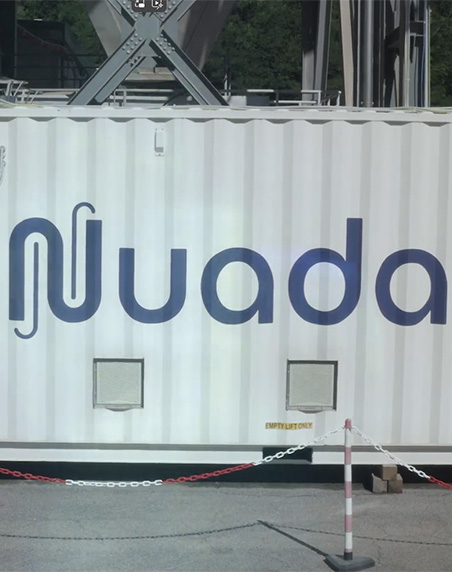
HSBC recognises the role that carbon management solutions can play in decarbonizing the UK economy. We are proud to have provided project finance to carbon transport and storage infrastructure such as the Northern Endurance Partnership; venture debt to homegrown carbon capture technology providers like Nuada; and financial solutions for innovative UK CDR firms such as Mission Zero. We believe the UK now has a unique opportunity to demonstrate how carbon management technologies can deliver low cost decarbonisation of hard to abate sectors and maintain a reliable, secure supply of energy.
Today we finance a number of industries that significantly contribute to greenhouse gas emissions. We have a strategy to help our customers to reduce their emissions and to reduce our own. Find out more here.
* Carbon Management is the over-arching term encompassing both carbon capture, utilisation and/or storage (CCUS) and carbon dioxide removals (CDR) – similar but distinct technologies. CCS refers to the capture and storage of newly created CO2 molecules from industrial activities before they reach the atmosphere. CDR covers all technologies which remove and sequester existing CO2 molecules from the atmosphere – be it via nature based solutions like afforestation or engineered solutions such as Direct Air Capture.
Any opinions expressed are merely opinions and not facts. All information in this document is for general informational purposes and not to be construed as professional advice or to create a professional relationship and the information is not intended as a substitute for professional advice. Nothing in this document takes into account your company’s individual circumstances. HSBC Innovation Banking does not make any representations or warranties with respect to the accuracy, applicability, fitness or completeness of this document and the material may not reflect the most current legal or regulatory developments. HSBC Innovation Banking disclaims all liability in respect to actions taken or not taken based on any or all of the contents in this document to the fullest extent permitted by law. Nothing relating to this material should be construed as a solicitation or offer, or recommendation, to acquire or dispose of any investment or to engage in any other transaction.