Innovation
Built to last: What it takes to scale a consumer brand in 2026
- Innovation
- Article
- 7 minutes read

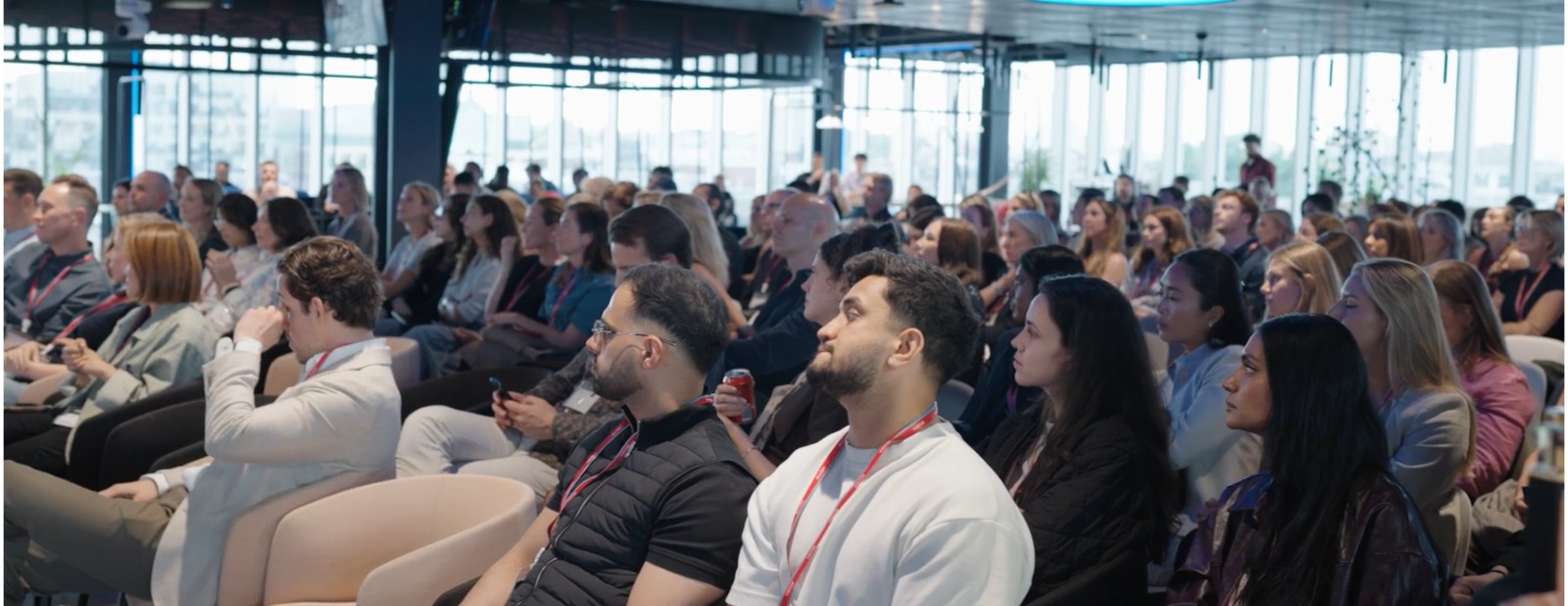


What does it take to launch and scale a successful consumer brand today? It's a question many founders, investors and retail leaders are grappling with. In June 2026, we helped bring together some of the UK's most influential industry voices in the same room to answer it.
State of Consumer 2026 welcomed hundreds of guests to TikTok UK's Kaleidoscope HQ in London. Co-hosted by HSBC Innovation Banking, Boots and TikTok Shop, the event was designed to bring global retailers, leading investors, platform builders and startups together to share their perspectives on the sector.
Four panel discussions, a series of live founder pitches and hours of networking added up to a day full of practical takeaways. In this blog, we explore some of the key themes and perspectives that emerged.
Grace Vernon, Head of Boots Ignite, Foresights & Trends, opened the day with a picture of a consumer packaged goods (CPG) market in strong health and operating at high speed. She shared figures showing the sector was valued at $5.6 trillion (£4.2 trillion) in 2025 and is forecast to reach $7.8 trillion by 2033. Wellness and functional foods – driven by growing consumer investment in longevity and holistic health – are among the key growth areas.
But the headline numbers are only part of the story. The more significant shift is in the speed of the market itself. Having the necessary infrastructure and agility to act on trends at the right time could prove critical for brands and retailers looking to capitalise.
Grace Vernon, Head of Boots Ignite, Foresights & Trends"Trends now move from niche to mainstream in a matter of weeks and not in years."
Grace also noted that physical retail continues to account for 80-85% of CPG sales globally, but its role is changing. Successful in-person buying experiences today are built around not just product availability, but also expertise, trust and entertainment.
A central theme of the first panel discussion was how businesses are breaking down the boundaries between content and commerce. The consistent message: the brands cutting through in 2026 are leading with entertainment, not promotion.
Charlotte Lock, Chief Customer Officer at Boots, described the retailer's summer partnership with Channel 4 as a deliberate attempt to let products show up naturally within entertaining content:
Charlotte Lock, Chief Customer Officer, Boots"You've really got to know what your story is and what your point of view is, and remain true to that. Entertainment is hugely important, and to get people to go into physical retail, you've got to have something that is either educational or really entertaining, or something extra."
The same principle applies across channels. Lucy Irving, Cultural Strategy Lead at ITV, argued that entertainment needs to come first, with brand influence following from that, which means “being good guests” and matching the environment in which you're advertising rather than interrupting it.
On TikTok, the underlying logic is the same. Knowing what you want the platform to do – generating hype, building awareness or driving sales – determines how you show up on it.
George Meagher, Head of Business Development FMCG, TikTok Shop"It's critical to decide what role this platform is going to be playing for you. If you go in loosely, hoping for all things at once, it's a lot harder to succeed."
Dan Turner, Ecommerce Director at Carlsberg Britvic, added that operational excellence is the foundation beneath all of this. Without a reliable supply chain, consistent margins and robust distribution, creative strategy and platform presence count for little.
Dan Turner, Ecommerce Director, Carlsberg Britvic"If you work in a channel, you're siloed. If you work in an ecosystem, that's when you can really get that amplification."
The consumer sector accounts for around 60% of UK GDP, but attracts only about 6% of committed capital – a gap that points to both the challenge and the opportunity for founders seeking investment. John Stewart, Director at HSBC Innovation Banking, started the next panel with this stat and framed the discussion around what it takes to stand out in that landscape.
Our guest investors – Courtney Sawatzke of Active Partners, Kirsty Macdonald of JamJar Investments and Angela Chou of Felix Capital – were largely consistent in what they look for: capital efficiency, evidence of repeat demand across multiple channels and founders who can move quickly with limited resources. The panel noted that rapid growth concentrated in a single channel, or fuelled primarily by paid marketing spend, could attract more scrutiny than performance that has been driven organically.
On the question of venture capital, Taymoor Atighetchi, CEO and founder of Papier, offered a useful framing: it's a choice, not a default, and bootstrapping can be equally valid depending on your ambitions and appetite for dilution.
Taymoor Atighetchi, founder and CEO, Papier"If you're looking to build something very, very big and very, very quickly, VC is a great way of doing that. It gives you the capital and the support, but in exchange you are giving away some of your business."
The third panel took a candid approach to sustainability, emphasising that it's less about marketing virtue and more about the hard commercial realities of building a business where purpose and profitability can truly coexist.
John Collins, CFO of Vivobarefoot, set the tone plainly: sustainability only works commercially when it sits at the core of your belief system. Credentials that are added as an afterthought tend to be exposed.
John Collins, CFO, Vivobarefoot"Think about what is at the core of your belief. If sustainability isn't there, don't retrofit it, because it won't hold up under margin pressure or consumer scrutiny."
The final panel covered the practical infrastructure that can help you scale: from fulfilment and creative content to data-led testing and media amplification.
A key theme was the value of testing ideas in-market quickly, rather than refining them internally. Nikolas Venios, founder of The Ideas Agency, illustrated this with a real example: a children's mental health charity was guided away from a door-drop campaign towards a digital kindness calendar, built and deployed in five days. It resonated, drove donations and gave the team the confidence to scale.
On the operational side, Rob Tripp, Operations Director at FDD, was direct about what founders most commonly overlook. Data accuracy, compliance and packaging waste obligations are the challenges that tend to catch brands off guard, and the costs of getting them wrong scale with the business.
Oli Hills, CEO of Nonsensical, noted it's easy for brands to underestimate how much consistency matters, especially on a platform like TikTok, where you need a recognisable creative identity to make an impact.
Oli Hills, CEO, Nonsensical"You need to create content that people recognise before they even look at your brand handle. Consistency is the foundation, and TikTok gives you the chance to be discovered by people who didn't even know they needed your product."
Across four panels and a day of conversation, a consistent theme emerged: the consumer sector in 2026 is faster, more competitive and more complex than it has ever been, but the fundamentals of building a great brand remain the same. The companies that are navigating the industry most successfully are those that have innovated without losing focus on the basics: product quality, community, authenticity and operational rigour.
Events like State of Consumer 2026 exist to help founders navigate exactly these challenges, bringing investors, retailers, platforms and new brands into one room for the kind of honest, open conversation that is hard to find elsewhere.
Any opinions expressed are merely opinions and not facts. All information in this document is for general informational purposes and not to be construed as professional advice or to create a professional relationship and the information is not intended as a substitute for professional advice. Nothing in this document takes into account your company’s individual circumstances. HSBC Innovation Banking does not make any representations or warranties with respect to the accuracy, applicability, fitness or completeness of this document and the material may not reflect the most current legal or regulatory developments. HSBC Innovation Banking disclaims all liability in respect to actions taken or not taken based on any or all of the contents in this document to the fullest extent permitted by law. Nothing relating to this material should be construed as a solicitation or offer, or recommendation, to acquire or dispose of any investment or to engage in any other transaction.

Securing and scaling the UK’s foundational systems: Inside our Critical Infrastructure Innovation Day

Bloom and Wild: A blossoming business built on obsessive customer experience

Inside our Textile Innovation Showcase: powering the industry’s next generation of startups
Second Thoughts: A Founder Success Podcast