Growth
Australia’s AI and tech sector opportunities
- Growth
- Article
- 3 minutes read



Greater adoption of information technology is often raised as a possible solution to improving weak productivity. In theory, at a high level, there are essentially two ways to go about improving aggregate productivity through tech. First is for firms in an economy to push progress at the technological frontier. Second is for firms across industries, particularly in ‘laggard’ industries, to improve tech adoption.
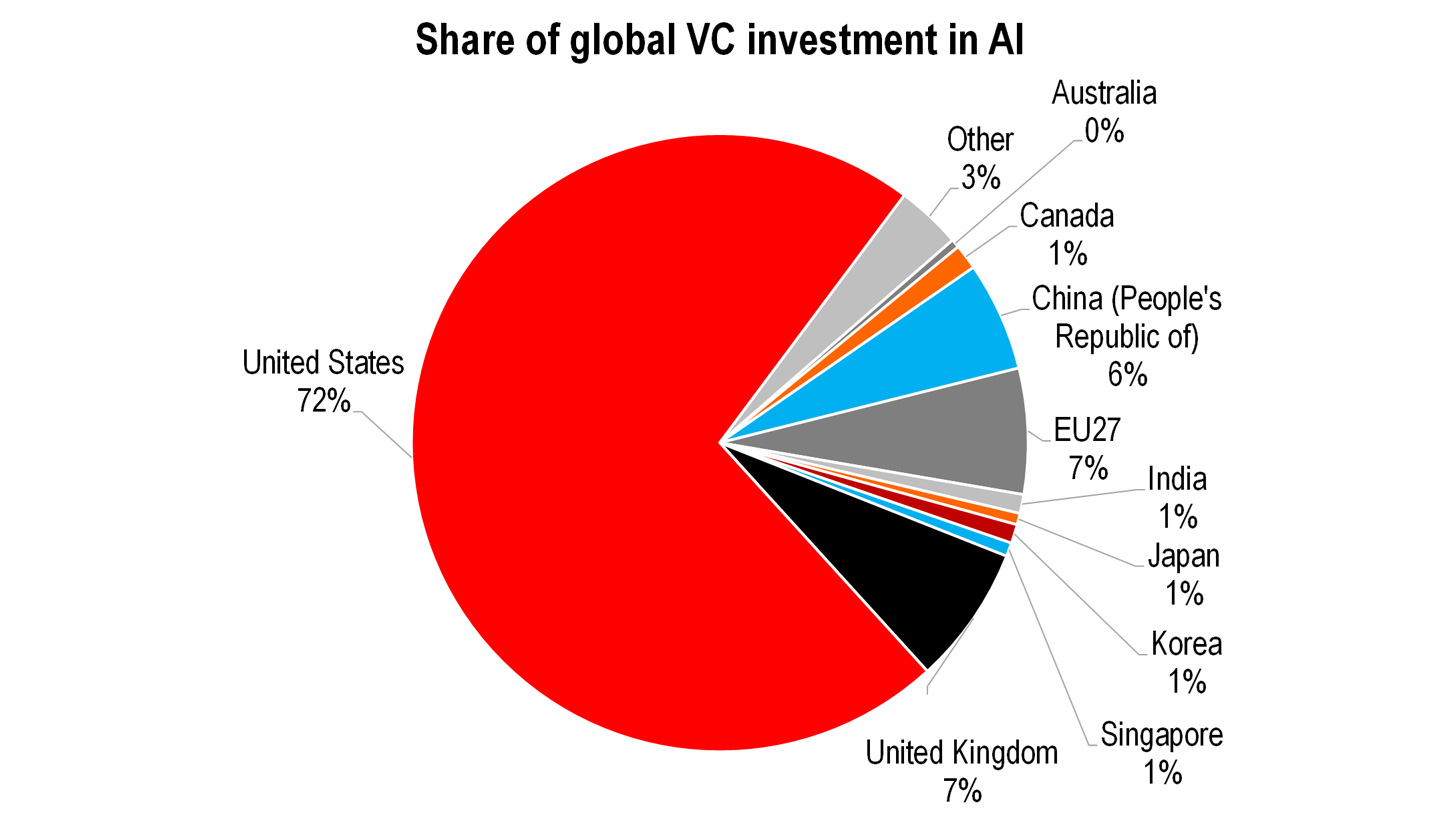
For firms to push the tech frontier, particularly for AI, it is likely to require funding for investment. Most of the global investment is currently being directed towards the US (Chart 1). For instance, of the USD146 billion in venture capital investments in AI in 2024, nearly three-quarters went to the US, with Australia accounting for only 0.5% (cUSD732 million). As Stanford University’s latest (April 2025) AI Index Report noted, the US has widened its lead in global private AI investment.
1. Most of the global focus on AI is centred on the US …
Source: OECD, HSBC
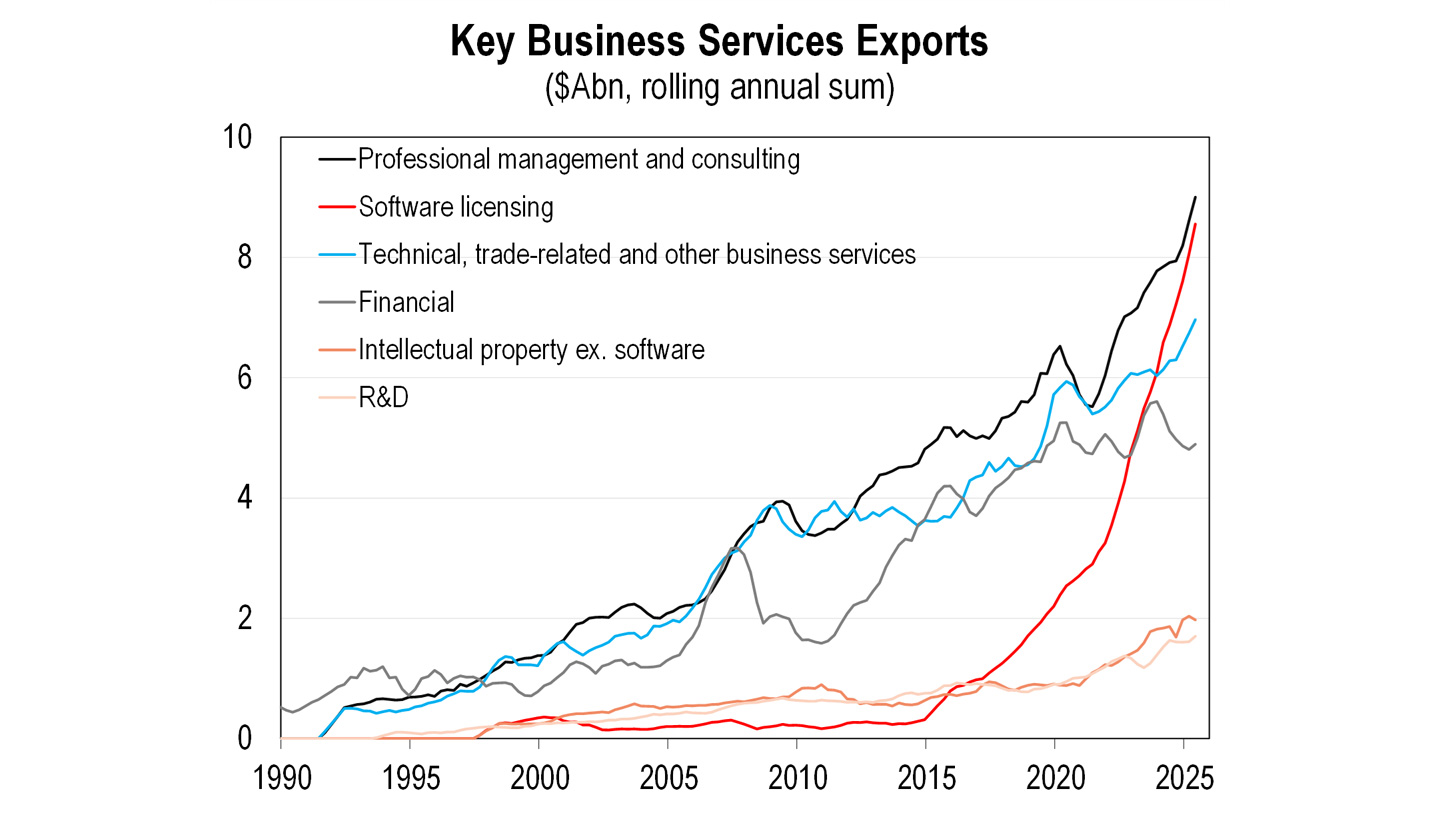
2. … though Australia has a few key tech companies exporting software services
Source: ABS, HSBC
However, Australia does have some tech companies that are leading the way. For instance, the value of software licence exports have risen 20-fold over the past decade (Chart 2). Software-as-a-Service (SaaS) companies, such as Australia’s Atlassian, Canva, and Xero (New Zealand), are examples where local firms have tapped into global demand across large-scale enterprise applications for mobile and web development solutions, amongst others.
That said, for the broader Australian economy, improving tech adoption across industries is likely to be more important for lifting aggregate productivity. If Australian firms are able to adopt cutting-edge technologies and processes and better apply tech from the global frontier to local activity, then this may improve Australia’s productivity outlook.
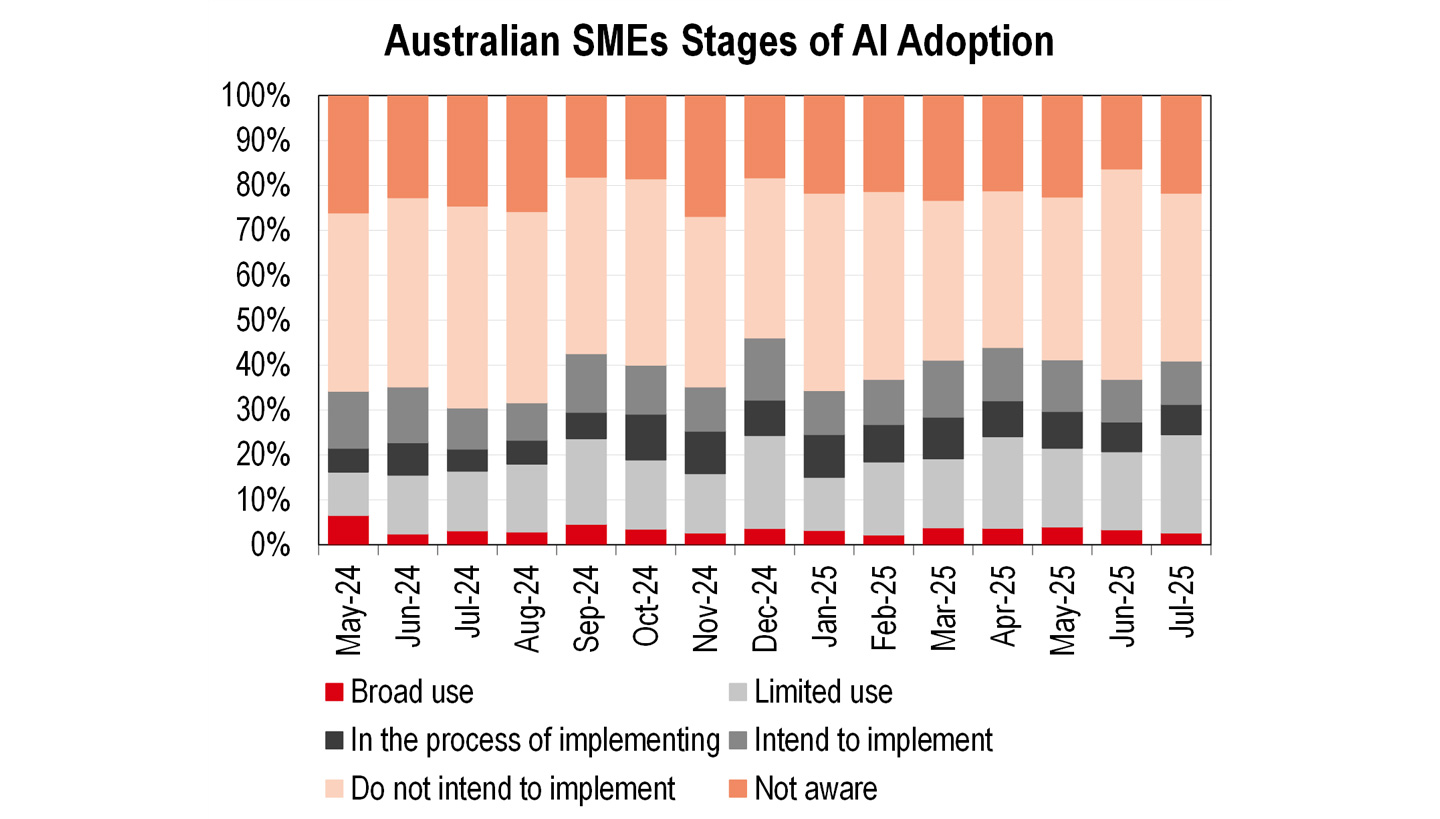
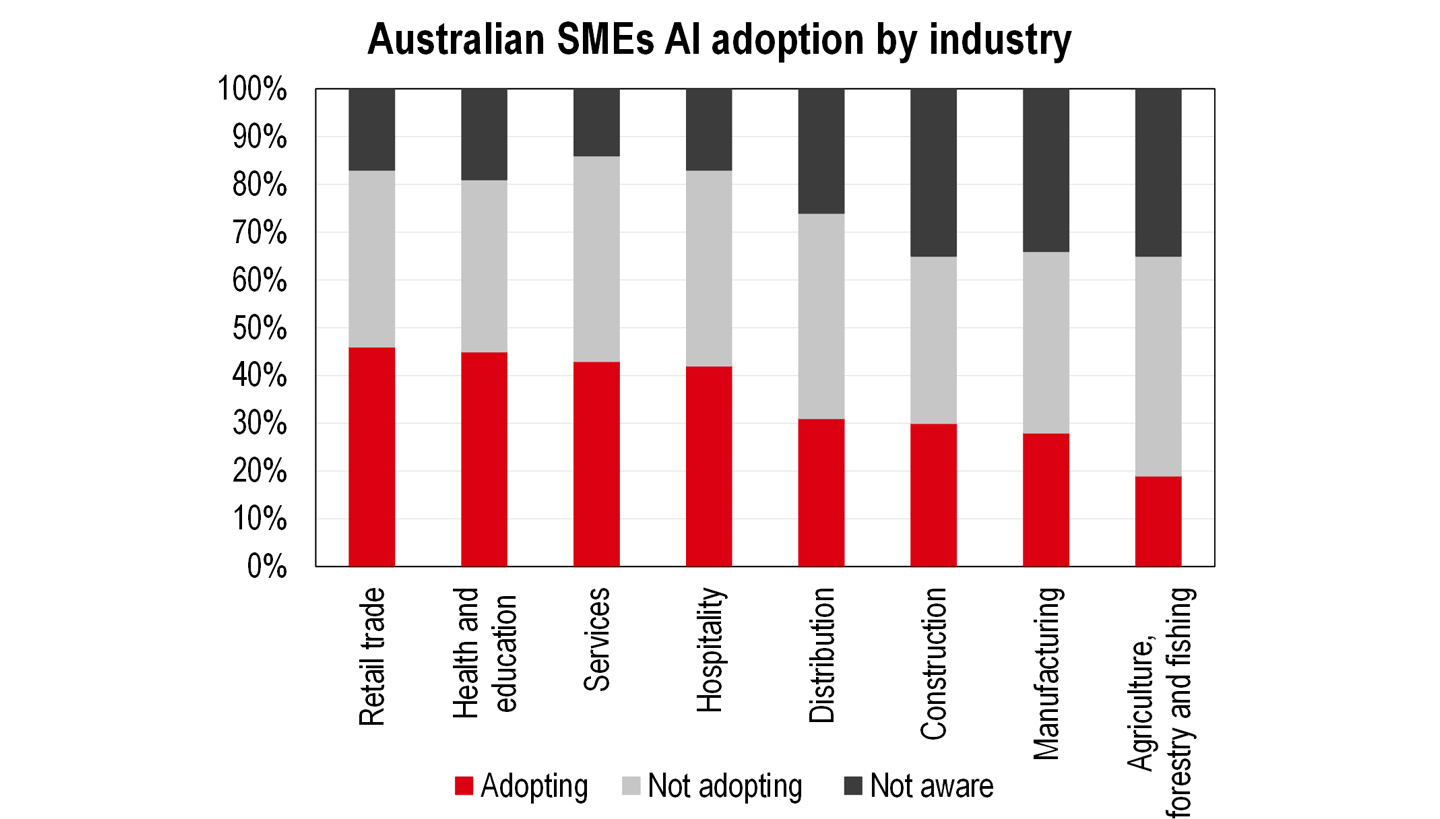
The latest findings from the Australian government’s National AI Centre show that while AI adoption of Australian SMEs is increasing, its use remains limited and varies significantly by industry. So far, only 3% of SME businesses report broad AI use, and 22% report limited use (Chart 3), with retail trade, health and education, and hospitality leading adoption (Chart 4). Wider integration appears to be hampered by the speed of AI development making investment decisions difficult, a shortage of skills and funding, and challenges integrating AI with existing tech systems.
3. AI has limited use across the broader SME complex, at this stage …
Source: Department of Industry Science and Resources, HSBC
4. … with adoption led by retail, health and education, and services
Source: Department of Industry Science and Resources, HSBC
In 2025, the Reserve Bank of Australia (RBA)’s business liaison also found that “for most firms, adoption has been shallow to date, with nearly 40% indicating minimal use so far” and that “adoption is typically limited to digital assistants, such as Microsoft Copilot or ChatGPT, which have largely been sourced as off-the-shelf AI products and are currently used for discrete tasks, such as summarising emails and undertaking research.1
So, while local AI adoption has been slow so far, speeding it up presents an opportunity for Australia to lift productivity and raise living standards.
This article originally appeared in the Cut Through Venture State of Australian Startup Funding Report, which examines the largest data set available on the Australian startup funding landscape. Click here to read more The State of Australian Startup Funding Report 2025.
The following analyst(s), who is(are) primarily responsible for this document, certifies(y) that the opinion(s), views or forecasts expressed herein accurately reflect their personal view(s) and that no part of their compensation was, is or will be directly or indirectly related to the specific recommendation(s) or views contained in this research report: Paul Bloxham and Jamie Culling
This document has been issued by the Research Department of HSBC.
HSBC and its affiliates will from time to time sell to and buy from customers the securities/instruments, both equity and debt (including derivatives) of companies covered in HSBC Research on a principal or agency basis or act as a market maker or liquidity provider in the securities/instruments mentioned in this report.
Analysts, economists, and strategists are paid in part by reference to the profitability of HSBC which includes investment banking, sales & trading, and principal trading revenues.
Whether, or in what time frame, an update of this analysis will be published is not determined in advance.
For disclosures in respect of any company mentioned in this report, please see the most recently published report on that company available at www.hsbcnet.com/research.
Additional disclosures

