Growth
Beyond the check: Why VCs need more than capital
- Growth
- Article
- 7 minutes read


Writing a check is only one part of the investment cycle for VC firms. But what happens after capital is deployed?
Today’s VC landscape is shaped by rapid AI scaling, concentrated mega-round financing, and rising global competition around digital infrastructure. According to the HSBC Innovation Banking 2026 Innovation Horizons: Asia-Pacific report, early-stage AI deals in Southeast Asia, excluding Singapore, reached 45% in 2025.
The numbers show that, while capital is available, it has become more concentrated around companies that can justify larger, more capital-intensive bets.

Angela Toy, partner and COO at Golden Gate Ventures / Photo credit: Golden Gate Ventures
“Southeast Asia has moved from a period of abundant capital to a more selective, more disciplined funding environment,” says Angela Toy, partner and COO at Golden Gate Ventures, an international VC firm that connects capital across high-growth markets in Asia and the Middle East. “A few years ago, the market rewarded speed, market share, and aggressive expansion. Those things still matter, but the threshold has changed.”
“What we’re seeing is venture becoming more operational,” adds Neil Falconer, head of Innovation Banking at HSBC Singapore. “In Southeast Asia, where capital and expansion are inherently cross-border, execution – liquidity, speed, and cash visibility – can be as important as the check.”
Founders today are expected to show “clearer unit economics, stronger governance, sharper capital allocation and a more credible path to profitability,” according to Toy. This has changed what they expect from investors, meaning capital is no longer the primary draw.
“Capital is only one part of the relationship,” she points out. “Founders want investors who understand how to build in fragmented markets, where regulation, talent, payments, distribution, culture, and capital access can differ significantly from country to country.”
The focus has shifted from hands-off investing toward practical guidance. Now, VCs are expected to help founders exercise strict discipline, providing the strategic insight needed to determine which initiatives to fast-track and which to put on hold.
With modern regional companies increasingly being forged through non-linear growth trajectories, it has become common for a startup to be founded in Singapore, handle its development in Vietnam, and find its customer base in Indonesia.
“Southeast Asia has never been a single-market story,” Toy says. “Cross-border connectivity matters because opportunity now moves across corridors.”
HSBC’s report estimates that upwards of 90% of Southeast Asia VC funding flows through Singapore, signaling that scaling in the region is often multi-market by design. As startups expand beyond Southeast Asia, building trust in Jakarta may require a different approach than, say, Riyadh, just as enterprise sales cycles in Singapore often follow a different logic than those in Vietnam.

Photo credit: SeventyFour / Shutterstock
“The VC’s role is to help translate across those markets,” Toy adds. “That includes helping founders understand how trust is built in different ecosystems, how regulatory conversations happen, how enterprise sales cycles differ, and how capital providers evaluate risk across regions.”
To address these friction points, VCs tap into other players in the ecosystem, such as financial institutions.
HSBC Innovation Banking has built its venture support around three practical outcomes: liquidity to manage timing gaps, follow-ons, and distributions; speed to deploy when windows open; and visibility to maintain control across entities and markets.
That can include fund-level facilities such as capital call or general partner lines, as well as portfolio support like foreign exchange, treasury, and international banking support as companies scale. This has helped Golden Gate Ventures with its international growth, including the banking setup needed to operate in the Middle East, alongside regional introductions and ecosystem partnerships.
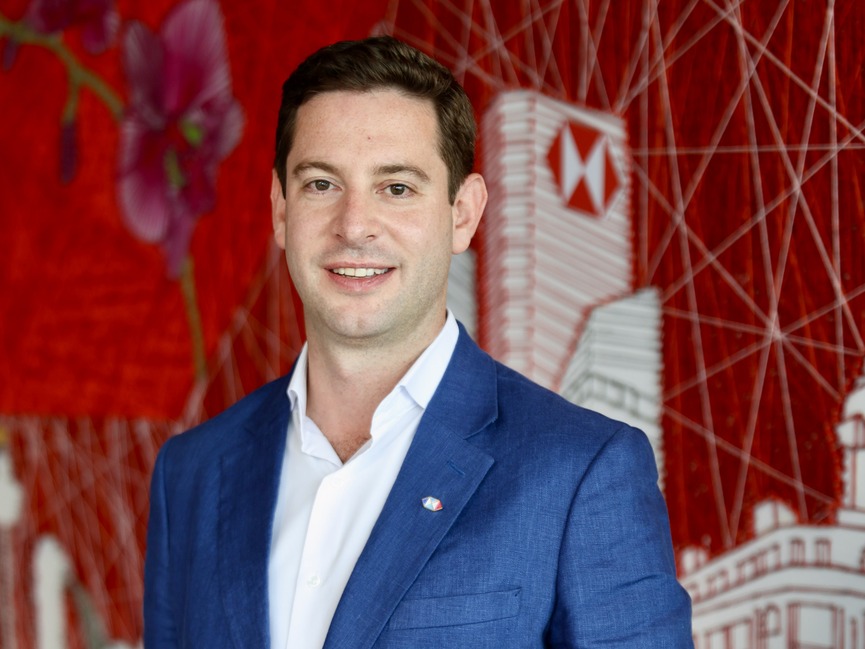
Neil Falconer, head of Innovation Banking at HSBC Singapore / Photo credit: HSBC
“Our goal is simple: reduce operational friction behind the scenes so VCs can focus on backing founders and scaling the portfolio,” says Falconer.
For Golden Gate Ventures, the value of a banking partner such as HSBC Innovation Banking lies in its grasp of both the fund and the portfolio sides of the ecosystem.
“A VC does not only need a bank that can open accounts,” Toy explains. “It needs a partner that understands capital deployment, growth-stage financing, cross-border complexity, founder timelines, and the reality of scaling companies across multiple jurisdictions.”
To illustrate: Early-stage startups may need reliable banking, payments, cash management, and basic controls. As they move into series A and beyond, requirements may include multi-country accounts, credit facilities, venture debt, trade finance, and eventually IPO-readiness or M&A support.
One example is Carro, a Golden Gate Ventures portfolio company. As a capital-intensive automotive marketplace with financing, insurance, and aftersales services, it required scalable financing structures and stronger treasury support.
HSBC’s solutions allowed Carro to streamline its operations across different markets into a single bank account, helping the business stay nimble and efficient. In 2024, the company signed a US$55.52 million (S$75 million) multi-currency loan with HSBC to support its regional growth and expanding financing capabilities.
While a strong banking partner can help businesses scale more smoothly, it is only one factor in a company’s performance.
“Outcomes come from founder execution, market timing, product quality, and disciplined capital allocation,” Toy says. “Banking solutions are enablers. They help companies scale with more control, more liquidity, and less operational friction.”
As Southeast Asia’s venture market matures, Toy believes successful VC firms will be defined by “disciplined conviction.”
“The region still has enormous potential, but the market has matured,” she explains. “Capital is more selective. Founders are more sophisticated. Limited partners are asking harder questions around performance, exits, governance and DPI [distributions to paid-in capital].”
The HSBC report notes that, in 2025, Western acquirers represented less than 20% of deals above US$100 million, while Asia and Middle East-based buyers accounted for 82% of similarly valued deals, reshaping how VCs think about exit pathways and timelines.
That raises the bar for VCs. Local depth remains crucial in a fragmented region, but international connectivity is now non-negotiable as companies scale across Southeast Asia, the Middle East, and other high-growth corridors. VCs also need to think more carefully about governance, capital efficiency, follow-on strategy, and portfolio construction.
According to Falconer, the right financial partner should provide specialized, end-to-end support that aligns with how funds operate. That includes solutions shaped around a fund’s structure, investment thesis, and portfolio composition, rather than generic products forced onto complex needs.
Toy also notes VCs should prioritize banking partners that demonstrate venture fluency, cross-border capability, sharp credit judgment, treasury strength, and relationship continuity.
“For VCs, the right banking partner becomes part of the operating infrastructure around the fund and the portfolio,” she says. “That matters more as Southeast Asia’s venture ecosystem moves into its next phase of maturity.”
This article was originally produced by and published on Tech in Asia, a member of Singapore Press Holdings (Beyond the check: Why VCs need more than capital)
Disclaimer
The information contained on this website is provided for informational purposes only, and does not constitute an offer to sell or the solicitation of an offer to buy any products referenced. Eligibility criteria and T&Cs apply for the products referenced. Local country restrictions and limits may apply. Please speak with your HSBC representative for more information.
This document is prepared by The Hongkong and Shanghai Banking Corporation Limited (“HSBC”) and is for the exclusive use of the person to whom it is provided. It is intended for reference and illustrative purposes only. It does not constitute an offer or solicitation for, or advice or recommendation that you should enter into any transaction with HSBC or any of its subsidiaries or affiliates.
HSBC has based this Document on information obtained from sources it believes to be reliable but which it has not independently verified. All information contained in this Document (including without limitation, information about products, terms and conditions, pricing, forecasts, market influences and HSBC policy) is subject to change from time to time without any obligation on HSBC to give notice of such change to you.
HSBC makes no guarantee, representation or warranty and accepts no responsibility or liability for the contents of this Document and/or as to its accuracy or completeness and expressly disclaims any liability whatsoever for any loss howsoever arising from or in reliance upon the whole or any part of the contents of this Document to the maximum extent permitted by law. You are responsible for making your own evaluation about the products referred to in this document. HSBC recommends that before you make any decision or take any action that might affect you or your business, you consult with suitably qualified professional advisers to obtain the appropriate financial, legal, accounting, tax or other advice.
© Copyright. The Hongkong and Shanghai Banking Corporation Limited 2026, ALL RIGHTS RESERVED. No part of this publication may be reproduced, stored in a retrieval system, or transmitted, on any form or by any means, electronic, mechanical, photocopying, recording, or otherwise, without the prior written permission of HSBC.